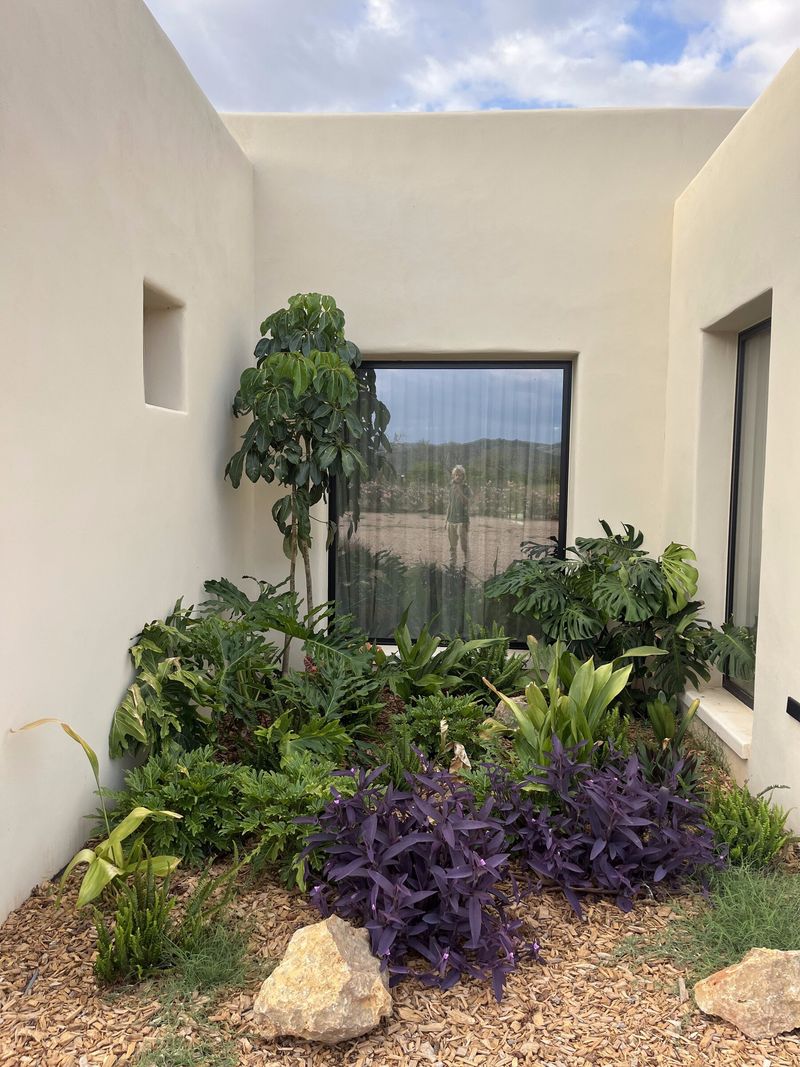
Landscaping for developers
Fixed price per phase, invoiced when each phase is done, and a first-year establishment guarantee.
How a project is priced
We quote each phase as a fixed price and invoice it when that phase is done. Where the scope allows a full estimate up front, you get one. Where it genuinely doesn't — and on terrain work before the ground is opened, it often doesn't — we tell you that rather than putting a number on it we would later have to revise.
You will never receive an invoice for a figure you have not already agreed.
The phases
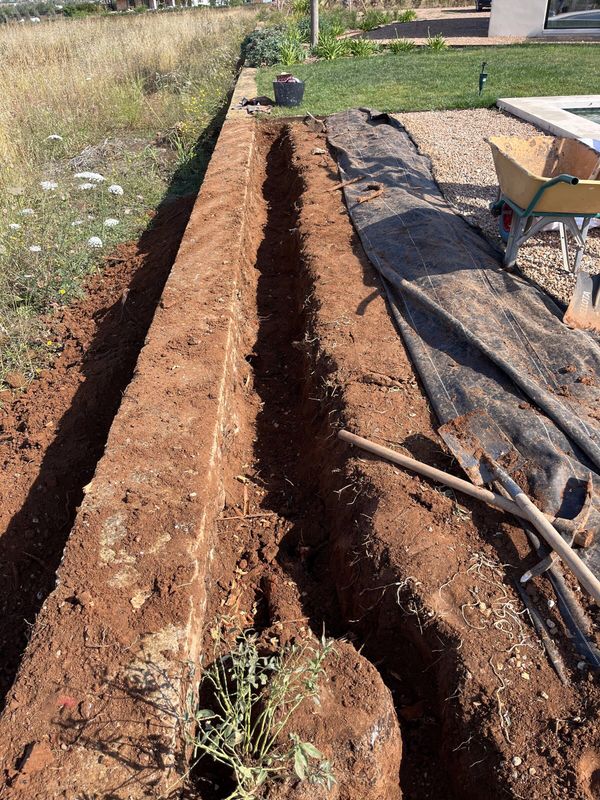
- 01 Terrain shaping and earth movement
- 02 Drainage and irrigation
- 03 Hardscaping
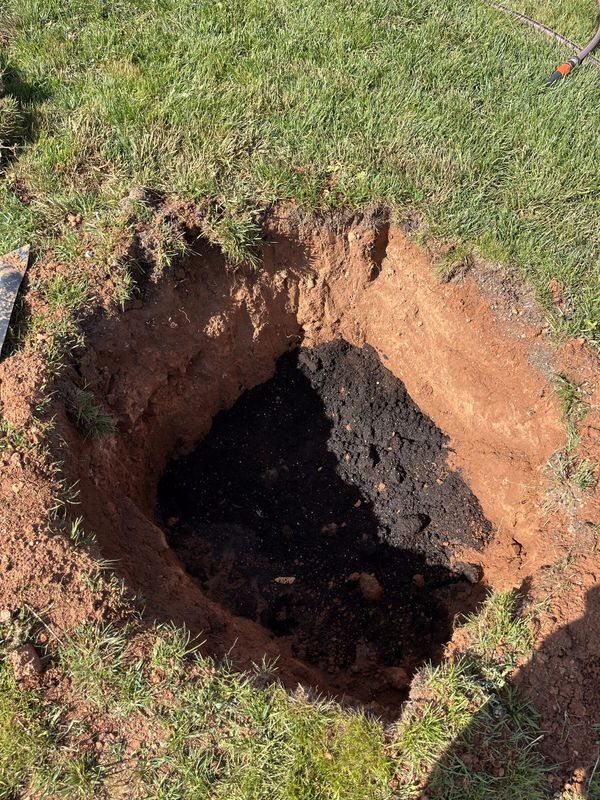
- 04 Soil and planting
- 05 Establishment year
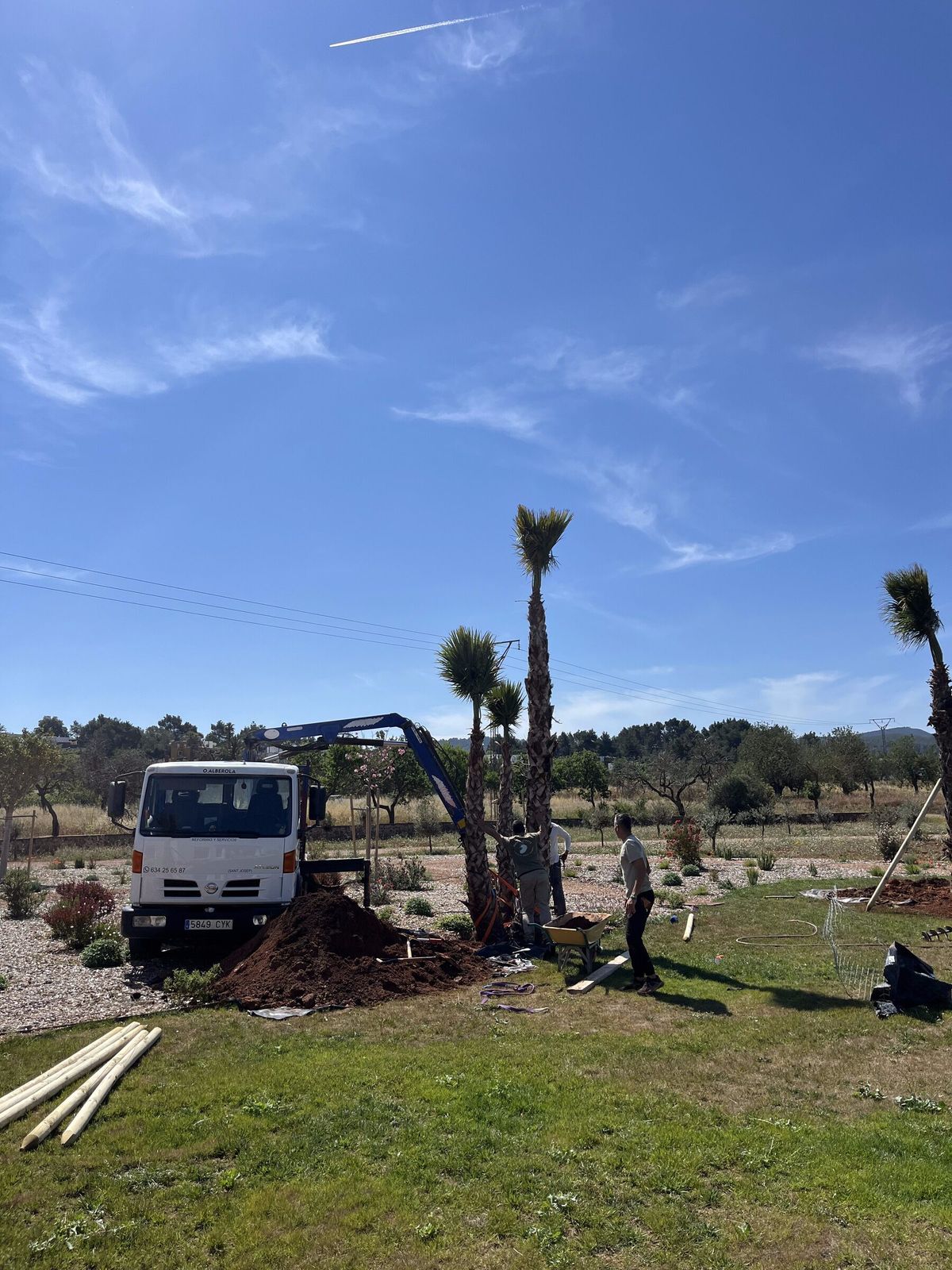
We ran every phase on this page on one house in Sant Antoni de Portmany in the spring of 2025 — a new build, landscaped to be sold. Bare plot to eight established palms, a seeded lawn, mulched beds and working irrigation, in the order set out above.
What we need from your build
Three things decide whether a garden lands on programme, and none of them are ours.
Irrigation first fix, before hard surfaces go down. Retrofitting irrigation under a finished terrace costs more than it did to lay the terrace.
Machinery access. Earth movement, mature specimens and stone all need a route in. If the only access is closed off by the time we start, the same work happens by hand at several times the cost.
Screening planted early. Privacy from neighbours is usually wanted on day one of occupation, and a screen that reads as a screen is not something that can be installed the week before handover — it either arrives as mature stock, booked months ahead, or it arrives small and takes two seasons.
What goes wrong, and how we avoid it
The most expensive thing that happens to a planting programme is stock arriving before the site can take it.
We order trees and large specimens against a date. If the site is not ready — access blocked, levels unfinished, the planting positions still under a compound — the trucks cannot unload where the plants are going and nothing goes in the ground. The stock comes to our own plot instead, we build a temporary irrigation system to keep it alive, and then we load, transport and unload every tree a second time when the site finally opens. Two deliveries, two unloads, an irrigation install that exists only to be dismantled, and mature specimens standing in a holding yard losing time they should be spending establishing.
We have been on the wrong side of this ourselves, through our own planning rather than anyone else's. It is why we now ask for the planting date to be reconfirmed against real site progress rather than the programme.
Sourcing and lead time
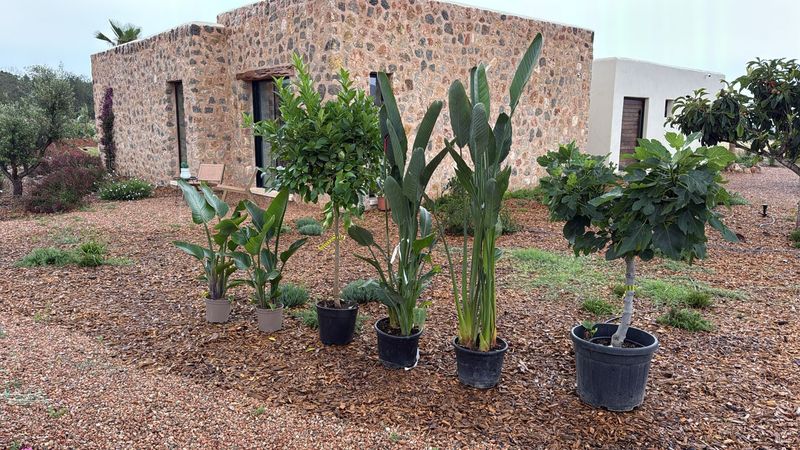
Most specimens come from mainland Spain, where the growers are better and the prices are lower, and we also work with growers on the island. For a large project this is a booking exercise as much as a buying one: the trees have to be reserved, inspected and shipped to meet a date, and the good stock goes early in the season.
Large or mature stock needs weeks of notice, not days. Problems rarely come from the ordering lead time; they come from the gap between the date we scheduled a garden to be planted and the date the site can actually receive plants. So we book against the date the site will really be ready, even if that means booking later.
What's included
Hardscaping is ours. So are licences and permits where the work requires them — we handle the applications and include them in the quote.
The first year
We guarantee plant establishment for the first year, and we maintain the garden through it at a reduced rate.
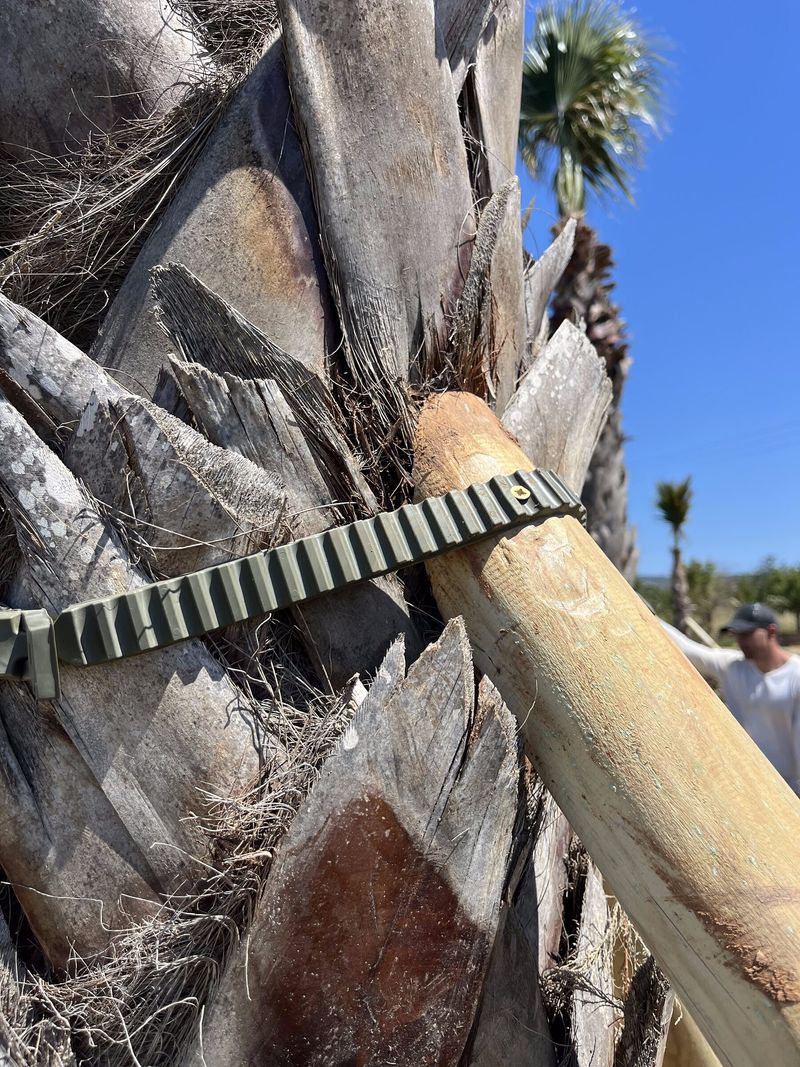
Plants fail for reasons nobody controls. In the first year, where one does, we replace it at our cost. The guarantee runs alongside the maintenance because establishment means watering, feeding and watching a garden through its first summer, and we can only guarantee it if we are the ones doing it.
The guarantee covers plants that fail to establish. It does not cover storm, fire, flood, animal damage, or a garden whose irrigation has been altered or switched off.