A Mediterranean garden doesn’t need the same thing every month. It needs almost nothing for long stretches, and then it needs everything at once — and the two seasons that matter most are the ones most owners aren’t on the island to see.
October to March — the heavy season
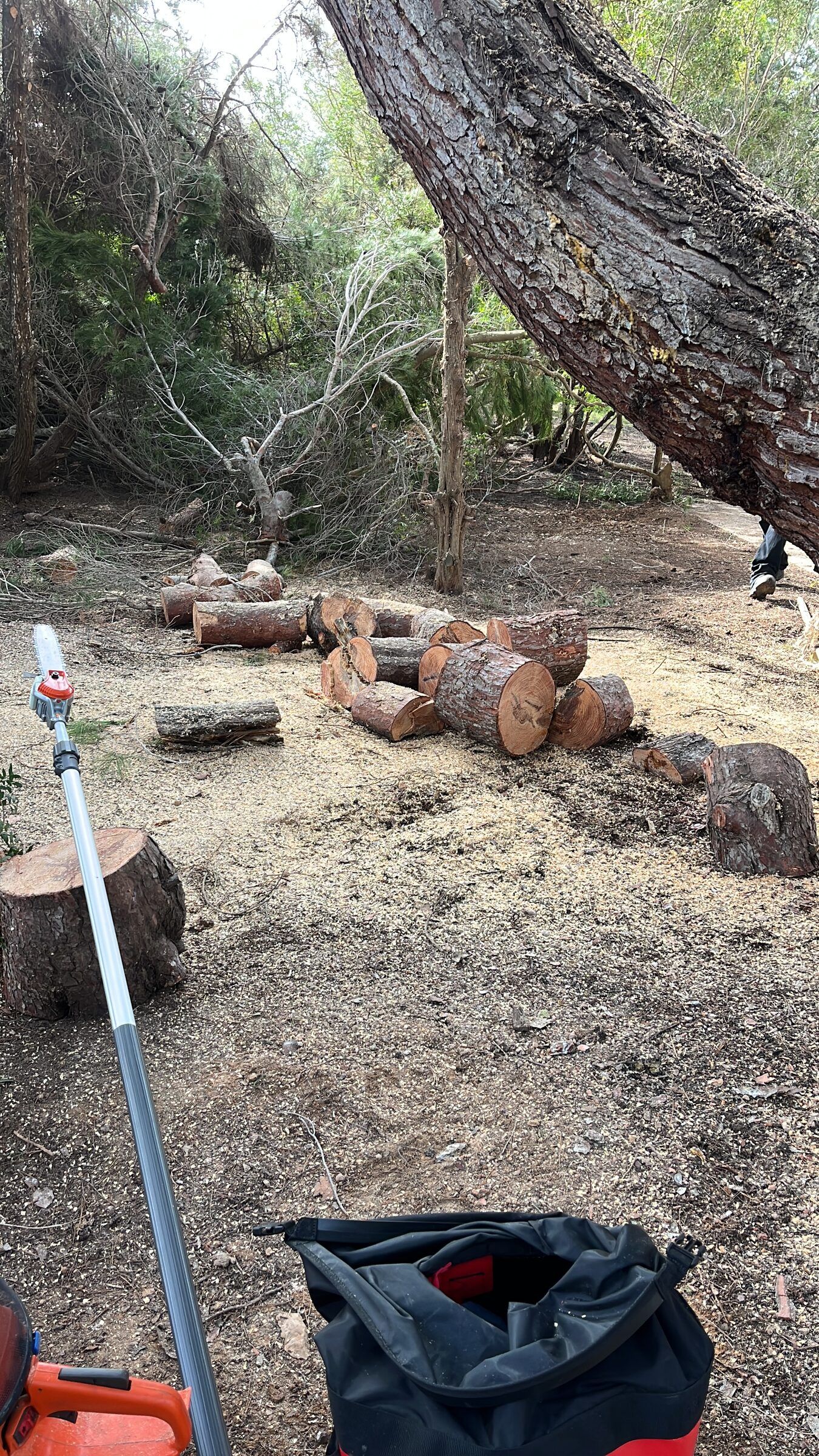
Structural pruning, tree work, replanting, soil improvement, anything that needs machinery — this is the window. Most things on this island are dormant or close to it, and pruning into the heat costs a plant more than it gains. Done now rather than in April, the cut heals cleanly.
Late autumn (November–December) is soil work first. Feeding after a dry summer, compost worked into beds that have been running on nothing since June, irrigation checked and adjusted before the winter rain does the watering for a while. This is also when we clear accumulated organic waste — a season’s worth of cuttings and dead material — and, where we can, shred it back into the garden as mulch rather than take it away.
January to March is the main pruning and tree work window. Olives get their structural cuts. Anything that needs roped access into a crown happens now, not in August with a full crown of leaf in the way. New planting goes in while the ground is cool and wet enough that a plant doesn’t have to fight for water in its first weeks.
Late winter (March) is the last call before growth flushes. Whatever pruning we didn’t finish in January and February, we finish now, because after March the plant is actively growing and a hard cut costs it more.
April to May — the turn
Growth comes back fast. Weed pressure rises with the first warm, wet spells, and irrigation schedules start climbing from winter minimums towards what summer will actually demand. This is adjustment, not intervention — we already made the structural decisions in the winter window.
June to September — the quiet season, by design
This is when owners are actually here, and the garden should look like it’s simply being kept, not worked on. Watering discipline matters more than anything else — early or late, never at midday, systems checked rather than assumed. It’s also the main window for watching processionary caterpillar, red spider mite and scale insects, all of which are easier to deal with caught early than after a summer left unwatched.
By June we’ve finished the heavy work and the visible routine is quiet. See garden maintenance for how that shapes the whole service, not just this one season.
October — the hinge
The first pass at cutting back begins as growth slows, and replanting and anything that needs machinery can start. Not the structural pruning yet — that waits for January — but the point where the garden stops being managed for summer and starts being prepared for the months that actually change it.
Working around this calendar
If you use your property seasonally, the practical version of all this is simple: a garden maintained on this rhythm should never need rescuing. The trap is a garden left alone from October to April and only picked up again in June — by then the heavy-season work has been missed entirely, not just delayed, and it shows for the rest of the year.
Read more on what regular maintenance actually covers, or get in touch if your garden’s current schedule doesn’t match this one.