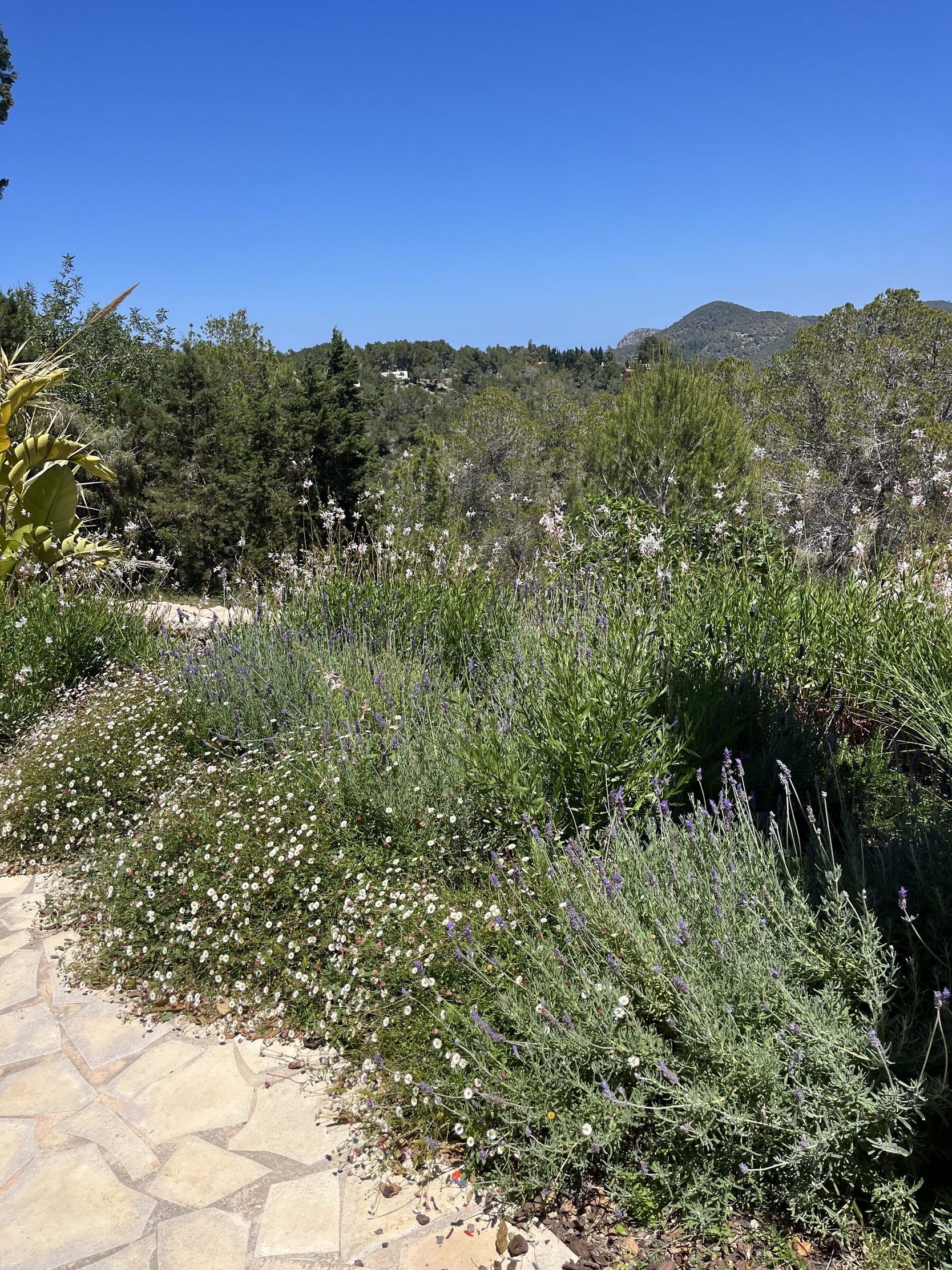
Ibiza’s climate is semi-arid Mediterranean: hot, dry summers with almost no rain between June and September, and mild winters carrying most of the year’s rainfall from October to March. That cycle sets the whole maintenance calendar.
Summer stress. Without irrigation, most non-native plants don’t survive here. Even drought-tolerant Mediterranean species need support while their root systems are still establishing, and overwatering in summer damages a garden about as fast as underwatering does.
Winter recovery. After a long dry season, plants are depleted. Autumn and early winter are the window for feeding and preparing soil for the growth cycle ahead. A garden left unmanaged through this period tends to perform poorly the following summer.
What regular maintenance actually covers
Pruning and shaping. Hedges, shrubs, ornamental and fruit trees, palms and flowering plants all need regular pruning to hold their shape and remove dead or diseased material. The main pruning window here is January to March.
Irrigation management. Programming, inspecting and adjusting drip or sprinkler systems — checking for blocked emitters, broken lines and zones running longer than they should. Seasonal adjustment matters more here than almost anywhere else; a summer check can be the difference between catching a leak and losing a season’s planting to one.
Weed control. Warm soil and winter rain make ideal germination conditions. Left alone, weeds compete hard with established plants for water and nutrients — a genuine problem in a dry-summer climate, not a cosmetic one.
Fertilising and soil care. Mediterranean soils are often thin, rocky and nutrient-poor. Regular compost or slow-release organic feed rebuilds what a dry summer takes out, and matters most straight after it.
Pest and disease monitoring. Processionary caterpillar, red spider mite, scale insects and fungal disease are the common problems in gardens here. Caught early, they’re minor. Left alone, they’re not.
Clearing and general upkeep. Fallen leaves, dead fronds, storm debris, and keeping pathways, terraces and pool surrounds clear — the routine work that keeps a property reading as cared for.
Lawn or beds? Usually both
Most gardens here mix lawn with planting beds, and the practical setup reflects that: a hybrid system, sprinklers for the grass and drip for everything else. Each zone runs on its own schedule, each plant gets what it actually needs, and you’re not spraying treated mains water into the air on a hot afternoon to keep a border alive.
If you’re designing from scratch and water is the priority, it’s worth asking whether the garden needs a lawn at all — see our irrigation systems page for how we think about that trade-off.
How often a garden needs attention
It depends on size, planting and whether the property is used year-round.
Large villas and fincas with established trees, lawns or productive planting typically need weekly or fortnightly visits through spring and summer, dropping to monthly in winter.
Medium properties with ornamental gardens, hedges and borders usually need fortnightly care in season, monthly through winter.
Smaller gardens or low-maintenance native planting can often run on monthly visits, with extra attention in spring and after summer.
The single most common mistake for owners who use their Ibiza property seasonally: leaving the garden without care between October and April, then arriving in June to overgrown hedges, dead irrigation lines and untreated pest damage. All of it costs more to fix than it would have when it started.
What to look for when hiring someone
Local plant knowledge. Someone who knows the difference between a carob that needs almost nothing and a bougainvillea that needs regular training and feeding.
Irrigation expertise — drip systems, pump configurations, efficient scheduling.
Year-round commitment. A garden here needs consistent care through the whole year. A reliable gardener manages the property on a fixed schedule and flags problems before you ask.
Clear communication about what was found and what’s planned, whether you’re on the island or managing the property remotely.
Worth knowing before you start
Check your water pressure — some parts of the island run lower than you’d expect, and it affects what systems will actually work.
If there’s a borehole, get the water tested. High salinity or mineral content damages plants over time and clogs emitters faster. Solvable, but you need to know up front.
Zone the garden properly — lawn, shrubs, trees, containers and any vegetable beds all want different amounts of water at different times. A well-zoned system lets you set that precisely; a poorly zoned one means something is always over- or under-watered.
Native and adapted plants cost less to keep
The most effective way to lower the long-term cost of maintaining a garden here is to build it around species already adapted to the climate. Pistacia lentiscus (wild mastic), olive, rosemary, lavender, oleander and Cistus (rockrose) need minimal irrigation once established, tolerate rocky soil, and look at home in the landscape rather than imposed on it. A garden built mainly around native and Mediterranean-adapted planting needs less water, fewer chemical inputs and less intensive pruning — without giving up how it looks.
The cost of skipping it
An irrigation system that hasn’t been checked since last summer can fail silently — losing water daily and killing plants that took years to establish. A hedge left two seasons without pruning may need cutting back hard enough that it takes a full year to recover its shape. A pine with untreated processionary caterpillar becomes a health hazard, not just a plant problem.
Consistent maintenance catches these while they’re still small and cheap to fix.
Working with Raíz
We provide garden maintenance for private villas, rural fincas and residential properties across Ibiza — based in Sant Carles, working with a deliberately small number of clients so the relationship with each property stays direct.
If you’d like to talk about regular maintenance, or a larger project, get in touch.
Species in this post
- Wild mastic (Pistacia lentiscus)
- Olive (Olea europaea)
- Rosemary (Rosmarinus officinalis)
- Oleander (Nerium oleander)
- Rockrose (Cistus)