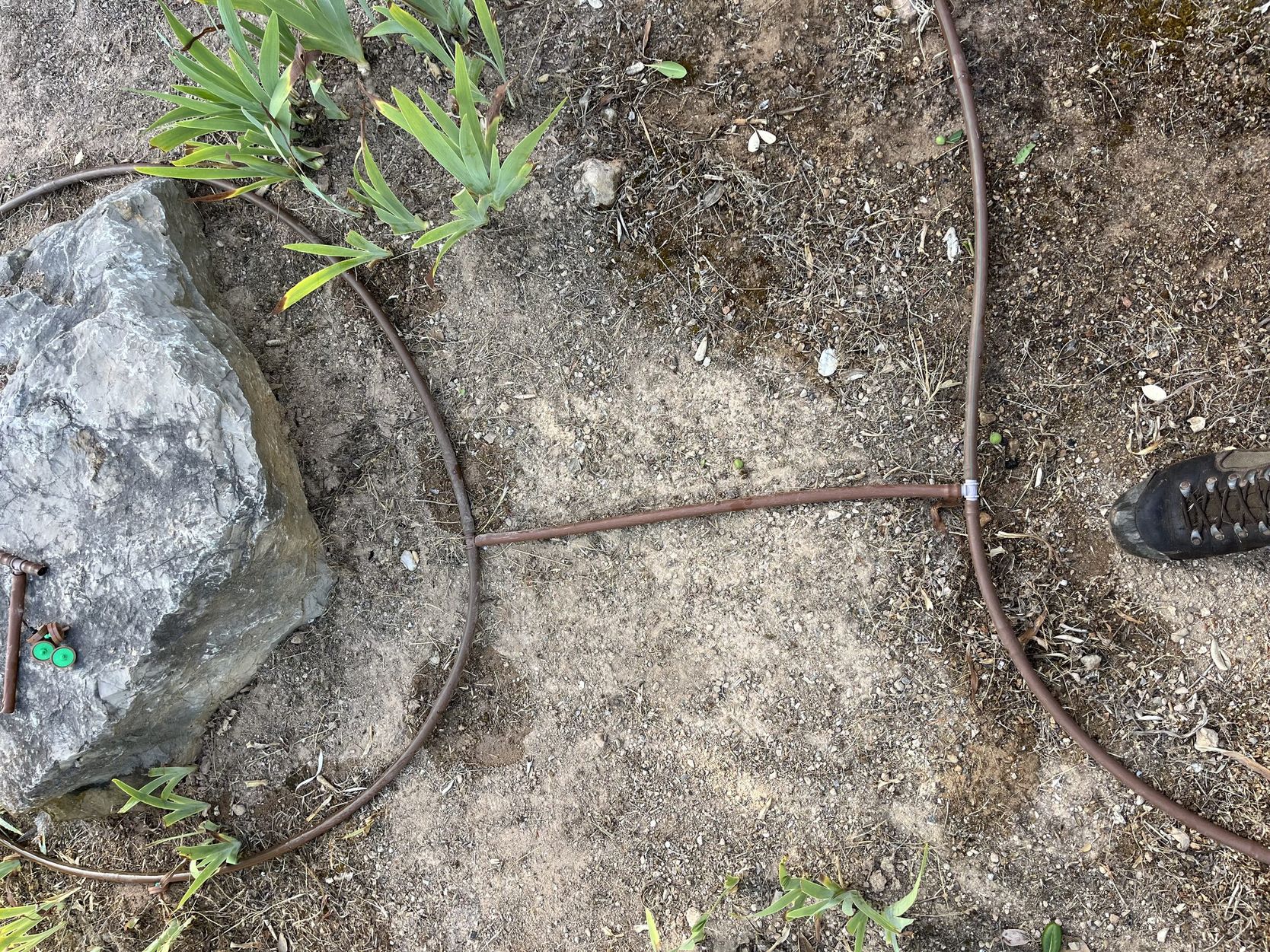
Drip
Drip delivers water slowly, at the base of the plant, through a line of fixed emitters. It’s the right choice for beds, young trees and orchards — anywhere the aim is to lose as little water as possible to evaporation or run-off, and where roots are established enough to make use of a slow, steady supply. Under mulch, the same line runs cooler and needs checking less often.
The trade-off is exposure. The tubing sits on or just under the surface, so it gets cut by tools, pulled up by weeding, or chewed. Emitters clog if the filter isn’t maintained. None of that rules drip out, but the line needs regular checking.
Rotary
Rotary heads throw water in a rotating arc rather than a fixed spray, which is what a lawn actually needs: even coverage across an open area. For a genuine lawn, rotary is close to the only practical option.
The heads are the weak point. Nozzles clog, arcs drift out of alignment, and a head left unchecked for a season waters the path instead of the grass — which looks like a watering problem and is actually a maintenance problem.
The choice that matters more
Neither system fixes a garden that’s drawing from the wrong source, or running through pipework nobody has checked in years. A villa on truck-delivered water and one on a well can run identical planting through identical irrigation hardware and still have nothing in common on the running cost, because the source sets the cost, not the hardware. Where your water comes from is explained on the irrigation systems page →
That’s the more useful question to ask before drip-versus-rotary: what is the water actually costing before it even reaches an emitter, and does the system it’s running through still work the way it was installed to?
What that looked like at Cala Bassa
The clearest version of this we’ve seen was a house and garden at Cala Bassa that were drawing from the same water. In summer the garden used it, and the owners could run out of water for a shower.
The fix wasn’t a different sprinkler head. We rebuilt the system with plumbers so the house and the garden now run on separate lines, and added storage tanks for the summer months. On the established planting we mulched heavily, which means most of it now needs the drip line rarely, or not at all, through the hottest part of the year.
Nobody runs out of water there any more. That came from fixing the plumbing and the soil, not from choosing one irrigation type over another.
In practice, most gardens need both
A lawn and a set of planting beds are common on the same property, and they don’t want the same delivery. The practical approach is a hybrid — rotary for the lawn, drip for everything else — each zone on its own schedule, which we check on the same visits as the rest of the garden.
That’s what the four water sources come down to in practice: the right delivery method for what’s actually growing, running on a system that’s been checked often enough that nobody finds out it’s failing from a water bill.