“Drought-tolerant” doesn’t mean no water, ever. It means the plant survives on what rain and an occasional deep soak give it, once it’s had a season or two to put down roots. Everything below still wants regular water for its first summer. After that, most of them ask for very little.
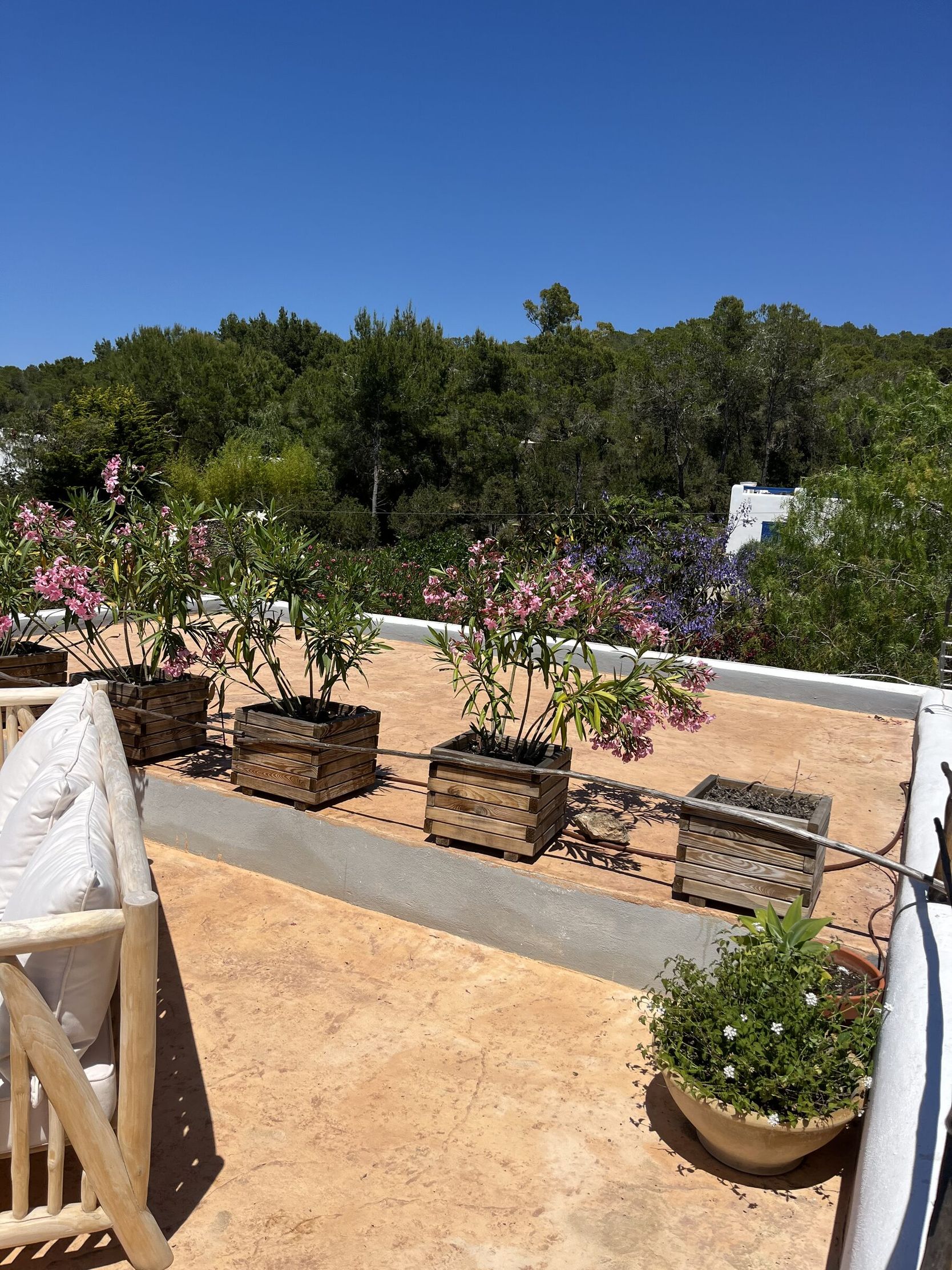
Oleander (Nerium oleander)
The shrub you already know from roundabouts and driveways across the island, and it earns the ubiquity — it flowers from spring into autumn, takes coastal wind without complaint, and comes in enough colours to work as a hedge or a single specimen. It’s also toxic if eaten, which matters if there are grazing animals or small children who put things in their mouths nearby.
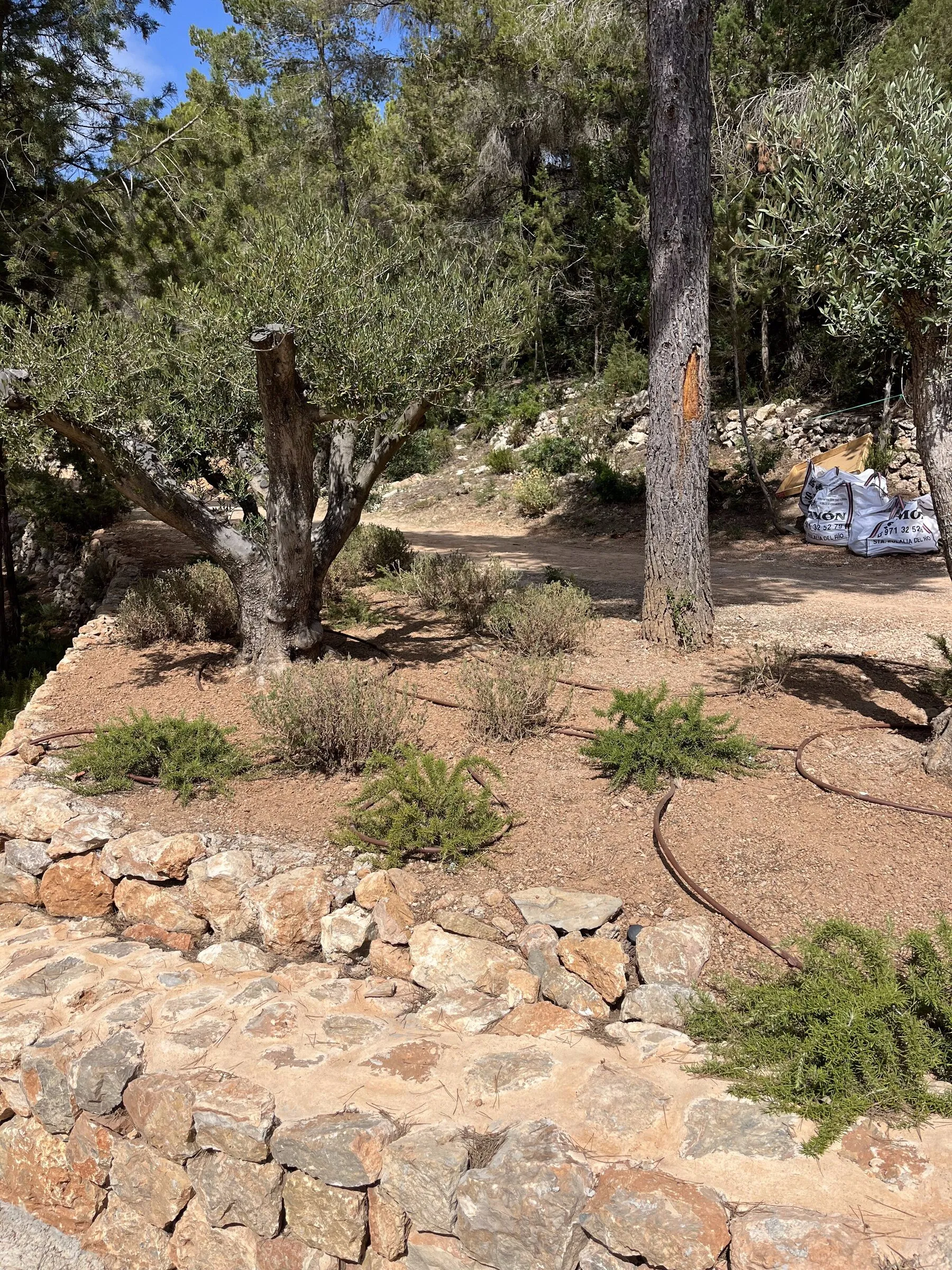
Rosemary (Rosmarinus officinalis)
Rosemary does better in Ibiza’s poor, rocky ground than in rich soil — feed it and water it generously and it gets leggy and short-lived. Left alone on a bank or a wall, it thickens up and holds the slope. The prostrate, creeping form works well trailing over stone; the upright form makes a loose, informal hedge.
Lavender (Lavandula angustifolia)
Full sun and sharp drainage are non-negotiable — lavender planted in a damp corner or heavy clay rots at the roots within a season or two. Give it both and it needs almost nothing else. Cut it back hard after flowering, or it goes woody and sparse at the base within a few years.
Wild mastic (Pistacia lentiscus)
A native evergreen that’s already doing the job unassisted on scrubland across the island. It needs no irrigation once established, tolerates salt spray near the coast, and is the shrub most often left standing rather than cleared when a property does firebreak work — low, dense growth with far less resin than the pine and gorse it grows alongside. It won’t win a prize for flowers; its job is structure and toughness.
Olive (Olea europaea)
Usually grown as a tree, but a young olive kept pruned hard reads as a compact, silver-leaved shrub — useful where a full-size tree would eventually outgrow the space. Slow, evergreen, and about as low-water as a woody plant gets on this island once it’s a few years in.
Rockrose (Cistus)
Native to the same scrubland as mastic and just as unbothered by poor soil or drought. It flowers hard for a few weeks in spring — white or pink, papery, gone by afternoon and replaced the next morning — then holds its grey-green foliage the rest of the year. Short-lived compared to rosemary or mastic, usually eight to ten years before it needs replacing.
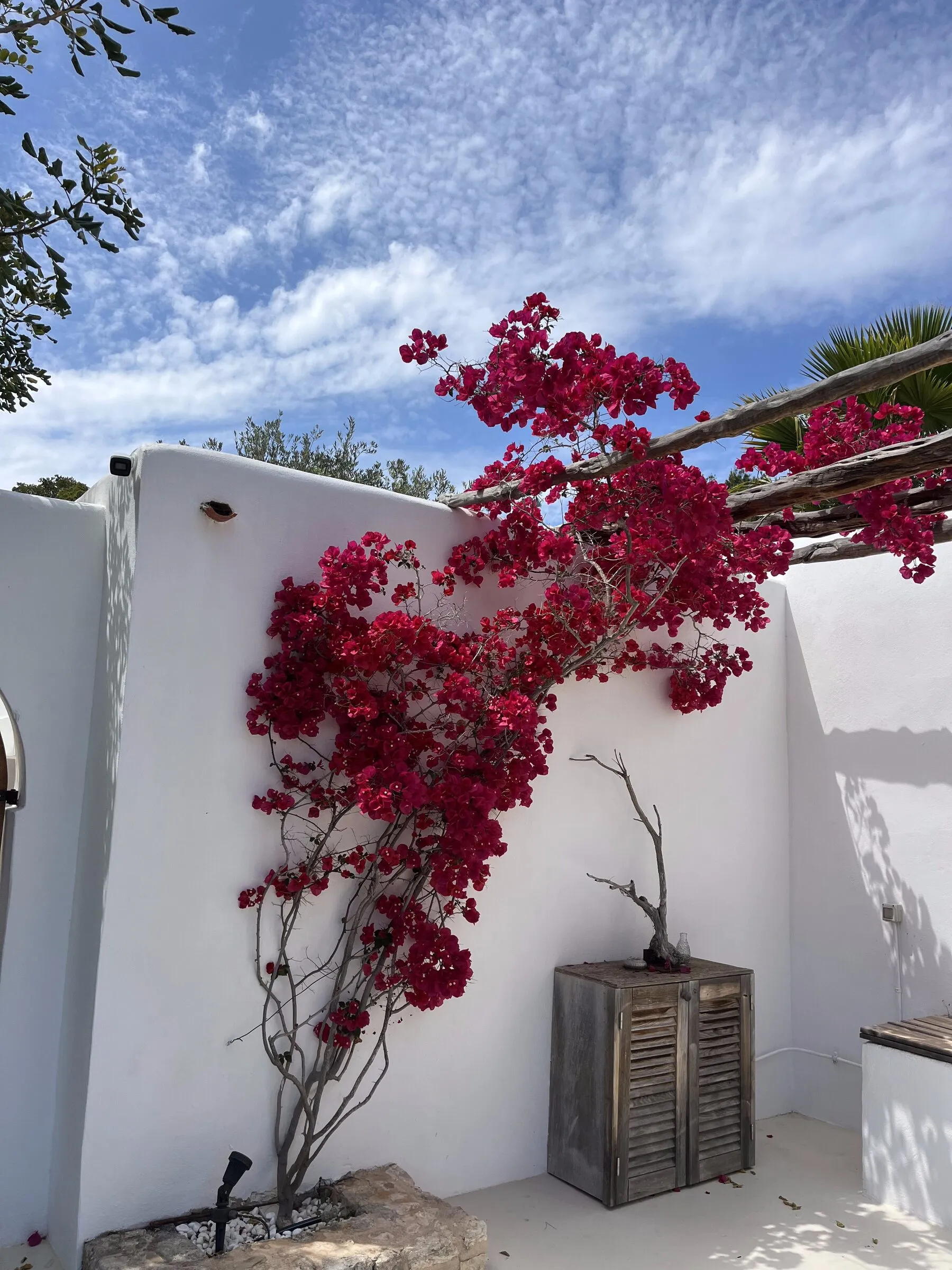
Bougainvillea
The one on this list that actually wants water and feeding to perform — it’s drought-tolerant in the sense that it survives a dry spell without dying, not in the sense that it flowers well on neglect. Give it a wall or pergola to climb, cut it back hard once a year, and it rewards the attention with colour that lasts most of the summer.
Silver germander (Teucrium fruticans)
A good low hedge where the crisp lines of box would need more water and more spraying than this climate makes sensible. Grey-leaved, small blue flowers in early summer, and it clips into a tight formal shape if that’s the look, or, left looser, it reads as informal Mediterranean planting.
Agave and aloe
Sculptural rather than soft, and useful for exactly that reason — a single agave as a focal point, or aloe grouped along a bank, needs no irrigation at all once it’s rooted in. Both are slow and architectural rather than fast-filling, so they work better as accents than as the bulk of a planting scheme.
Santolina
A grey, aromatic mound that holds a tight shape with an annual trim and asks for almost nothing beyond sharp drainage. Useful for low edging along a path or bed where a lavender hedge would eventually get too woody and gappy.
Savina (Juniperus phoenicea)
A native juniper found across the island’s scrubland, low and spreading rather than upright, and one of the plants that holds a slope together where erosion is a real risk. It roots deep, needs no irrigation once established, and its dense form does more to keep weeds down than any membrane or mulch on its own.
Getting them established
The usual failure with all eleven is the same: each one is watered like an annual bedding plant for its whole life, so it never sends roots down looking for its own water. Water generously through the first summer, taper off in the second, and by the third year most of this list should be managing on rainfall and the odd deep soak in the driest stretch of August. Plant in autumn or early spring, not mid-summer, so roots have cool ground to work with before the heat arrives.
Where drought-tolerant planting fits into a wider garden — hydrozoning, mulch, irrigation that matches what’s actually growing — is covered on the xeriscaping page.
Species in this post
- Oleander (Nerium oleander)
- Rosemary (Rosmarinus officinalis)
- Lavender (Lavandula angustifolia)
- Wild mastic (Pistacia lentiscus)
- Olive (Olea europaea)
- Rockrose (Cistus)
- Bougainvillea
- Silver germander (Teucrium fruticans)
- Agave and aloe
- Santolina
- Savina (Juniperus phoenicea)