Pine assessment and pruning before construction
Site & brief
A plot above Cala Jondal, mature Aleppo pines — Pinus halepensis — across most of it, and a house about to be built underneath them.
We were asked in before construction started, which is unusual and is the reason this went well.
Approach
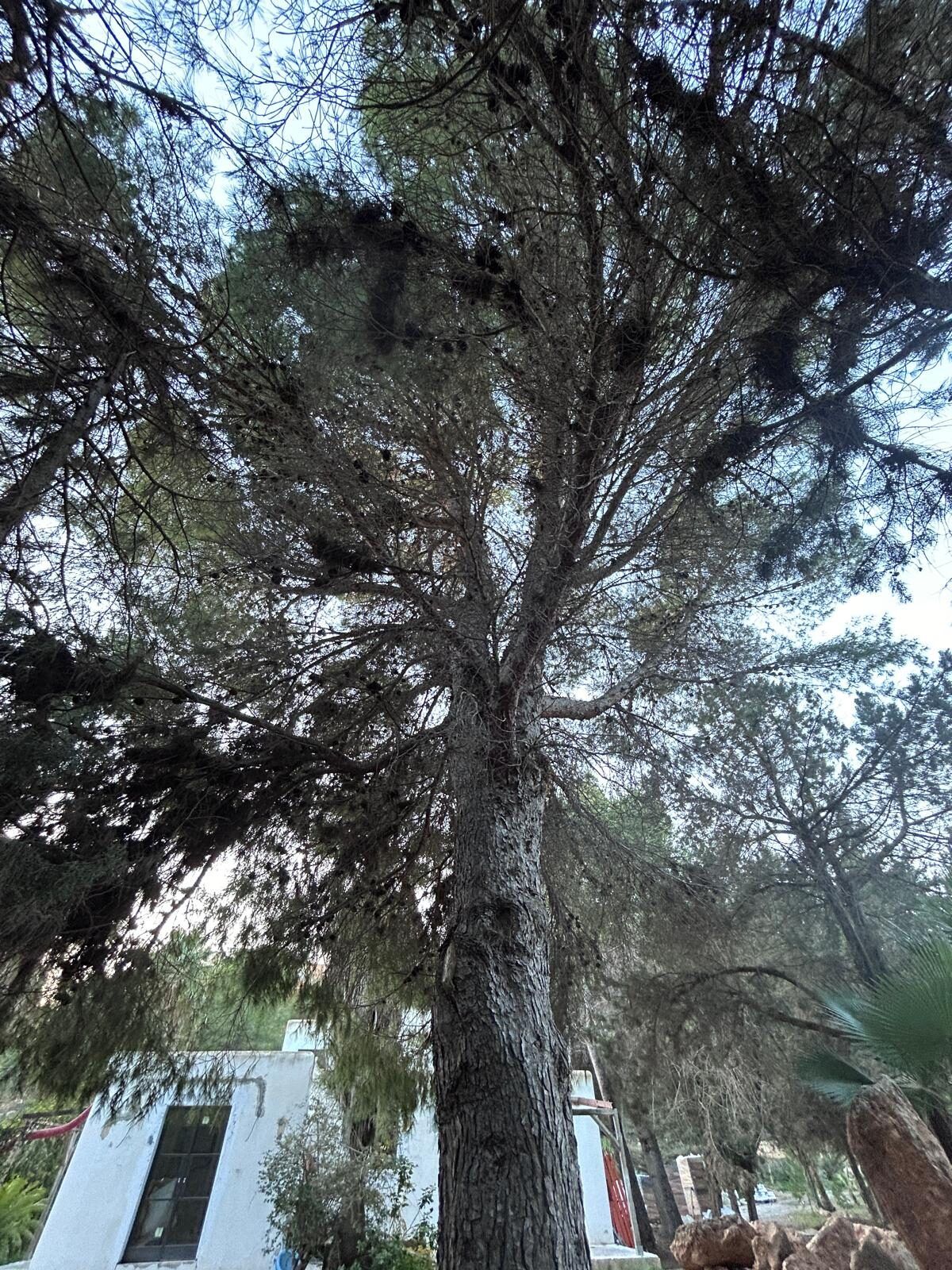
We assessed every mature pine on the plot in December 2024. Three questions, in order.
Is it sound? Structure, union points, deadwood, anything that would fail in a gregal wind.
Is it a hazard to the build? A tree that is perfectly safe in an empty field is a different proposition a metre from scaffolding, stacked materials and people working underneath it for a year.
What is it doing to the light? It decides what can be planted afterwards.
What we did
We did the work in February 2025 — two months after the assessment, in the dormant season, and before the site got busy.
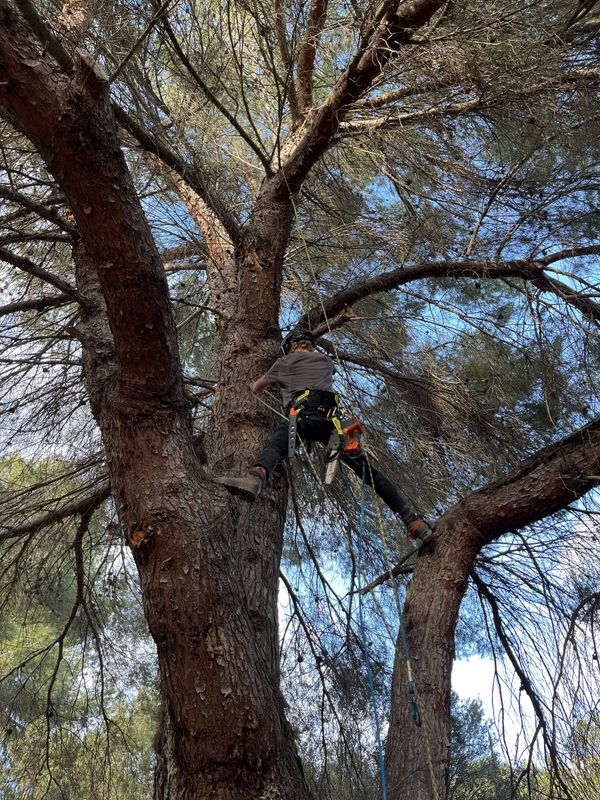
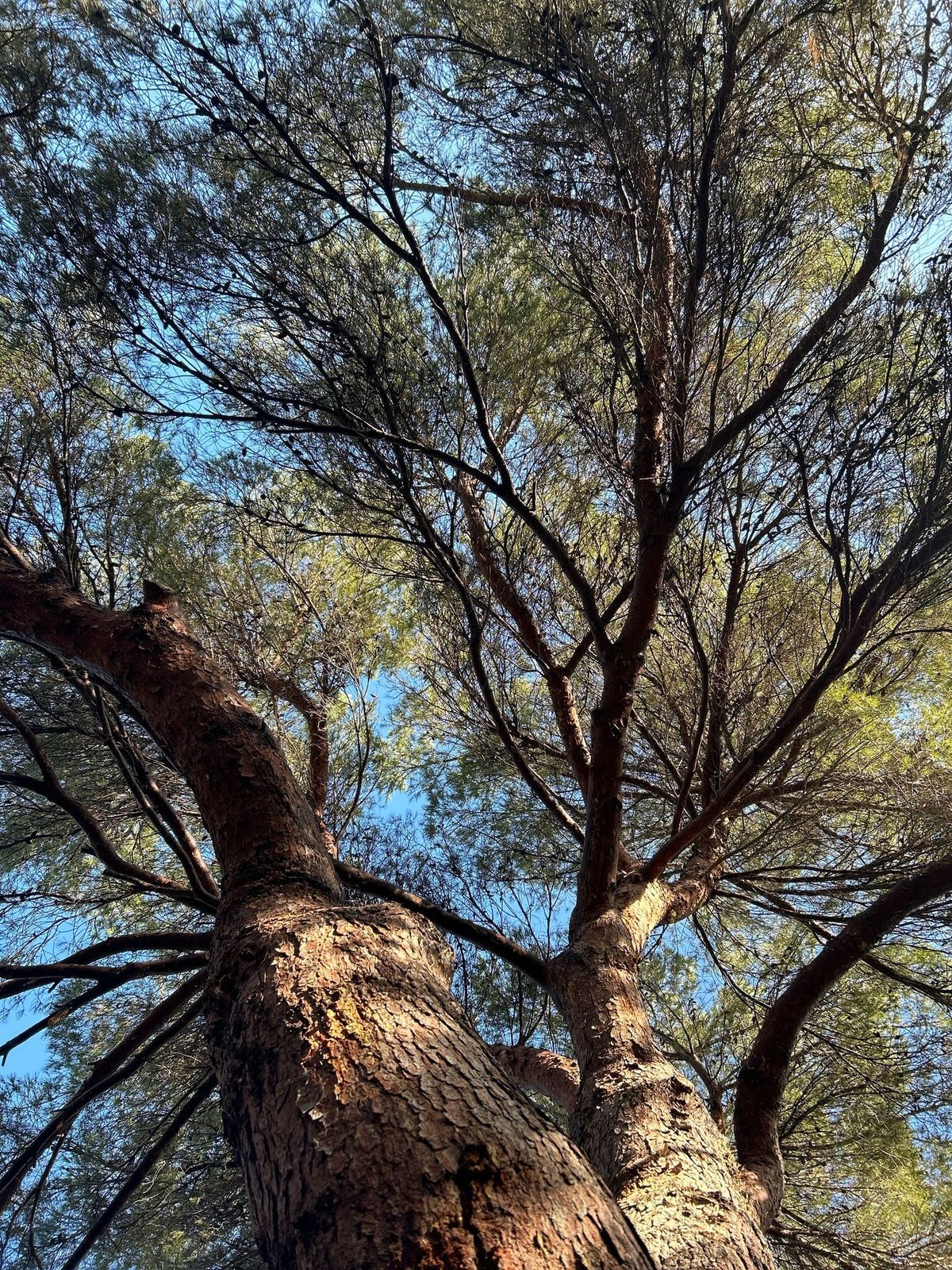
Structural pruning, done from the tree by roped access rather than from a machine on the ground. Deadwood out, crowns lifted and thinned to let light through to where the garden was going to be, and clearance opened around the building envelope.
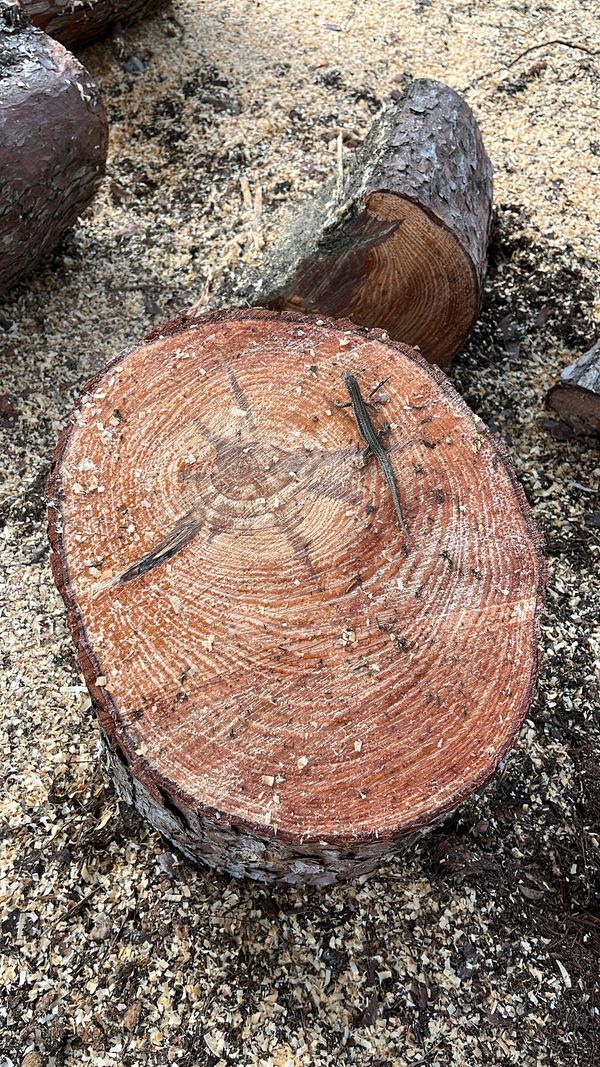
We took one pine down. We had assessed it, and it was not going to be safe standing over an active site for a year.
We do not remove trees because it is simpler. We try to keep as many as we can, and we say which ones have to go and why. A mature pine takes forty years to replace.
A planting plan depends on light. Until we have assessed and pruned the mature trees on a plot, you do not know how much light there is — so a scheme designed first and reconciled afterwards is how you end up with sun-lovers in permanent shade and a shade bed in full afternoon sun.
Doing the tree work first also means it happens once, properly, before there is a finished terrace underneath it to protect.