
Red Palm Weevil in Ibiza: How to Protect Your Palm Trees Before It's Too Late
If you own a property in Ibiza with palm trees, this is the most important thing you can read this year.
The red palm weevil — known in Spanish as picudo rojo (Rhynchophorus ferrugineus) — is active across the Balearic Islands and poses a serious, ongoing threat to Phoenix canariensis palms, the iconic Canarian palm found in gardens, villas and urbanizaciones all over the island. It is silent, invisible, and by the time most owners notice something is wrong, the palm is already dying.
At Raíz, we treat and inspect palm trees across Ibiza every week. This guide explains what the red palm weevil is, how to spot it early, and — most importantly — what you can do right now to protect your palms.
What Is the Red Palm Weevil?
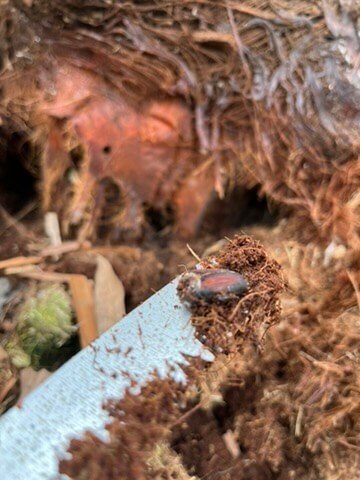
The red palm weevil is a large beetle, reddish-brown in colour, native to Southeast Asia. It first appeared in Spain in the mid-1990s and has since spread throughout the Mediterranean, thriving in exactly the warm, mild climate that makes Ibiza so desirable to live in.
The adult weevil is not the problem. The larvae are.
Female weevils lay their eggs inside the crown or in wounds on the trunk of palm trees. Once hatched, the larvae burrow deep into the heart of the palm, feeding on the soft internal tissue. They can excavate tunnels up to a metre long through the trunk, destroying it from the inside out. By the time visible symptoms appear on the outside of the tree, the damage is often irreversible.
The Phoenix canariensis — the Canarian palm — is the species most targeted by this pest in Ibiza. If you have one in your garden, it is at risk.
Why Ibiza Is Particularly Vulnerable
Ibiza's Mediterranean climate is ideal for the red palm weevil. Mild winters mean the beetle remains active throughout the year, unlike in colder regions where low temperatures slow its reproduction. A single female can lay hundreds of eggs in just a few months, making infestations spread fast — and silently.
The island also has a high density of mature Phoenix canariensis palms in private gardens, villa developments and comunidades, meaning infected trees can act as a source of spread to neighbouring properties. If a palm on your street goes untreated, your palms are at greater risk too.
Warning Signs: What to Look For
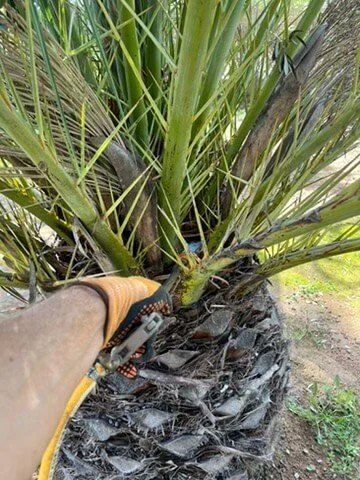
The most dangerous characteristic of the red palm weevil is that symptoms often do not appear until 12 to 24 months after initial infestation. By then, the internal structure of the palm may already be severely compromised.
However, there are early warning signs to watch for:
The central spear (lanza) does not open — new fronds appear but fail to unfurl properly
The crown leans or tilts to one side, often subtly at first
Young leaves are yellow or withered without obvious cause
Holes or soft spots on the trunk, sometimes with fibrous material or a fermented odour
A hollow sound when you knock on the trunk
Fronds that pull away too easily at the base
If you notice any of these signs, contact a professional immediately. Every week matters.
The Only Effective Prevention: Endotherapy
For many years, the standard treatment for picudo rojo involved spraying insecticide onto the exterior of the palm — an approach that is now known to be largely ineffective, as the larvae live deep inside the trunk where surface applications cannot reach them.
The only proven preventive method today is endotherapy — also known as trunk injection or microinyección endoterápica.
Endotherapy involves injecting a small quantity of approved systemic insecticide directly into the vascular system of the palm tree. The product is then carried upward through the sap to the crown and growing tissue — the exact area where weevil larvae develop. It works from the inside, reaching places no spray ever could.
At Raíz, we use certified products applied by trained technicians. The treatment is:
Safe — no surface spray, no chemical exposure to people, pets or surrounding plants
Invisible — small injection points that close naturally
Effective — the product reaches the palm's crown within 24 to 48 hours
Certified — we issue an application certificate with every treatment, as required by Spanish law
One important thing to understand: endotherapy is a preventive treatment, not a cure. If the infestation is already advanced, treatment options are severely limited and the palm may not be recoverable. This is why prevention is everything.
How Often Do Palm Trees Need to Be Treated?
To maintain effective protection, endotherapy needs to be repeated. We recommend two treatments per year — one in spring and one in autumn — timed to coincide with peak weevil activity. This protocol ensures continuous protection through the warmer months when the beetle is most active.
If you have multiple palms on your property, we offer a maintenance programme covering all trees with scheduled visits twice a year. This is the most cost-effective way to protect your investment and gives you the peace of mind of knowing your palms are being professionally monitored at every visit.
What About Pruning?
Pruning creates fresh wounds on the palm, and fresh wounds attract the female weevil — it is one of the primary ways a palm becomes infected in the first place. This is why professional pruning technique matters enormously.
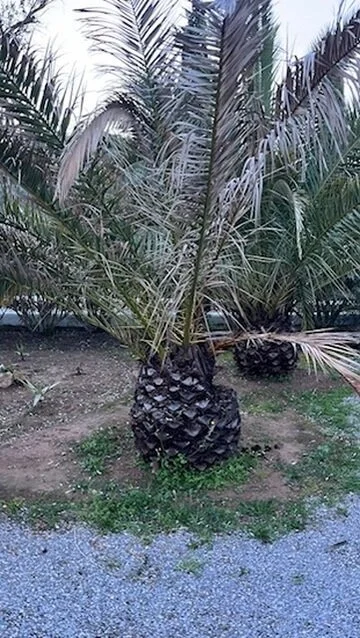
Over-pruning, or cutting fronds too close to the trunk, significantly increases infestation risk. We always follow correct technique: removing only dry or damaged fronds, leaving a healthy, full crown, and avoiding the "pineapple" cut that is unfortunately common on the island and that leaves palms both aesthetically damaged and biologically weakened.
We also recommend scheduling endotherapy treatment after any pruning work, as a direct precaution.
The Cost of Doing Nothing
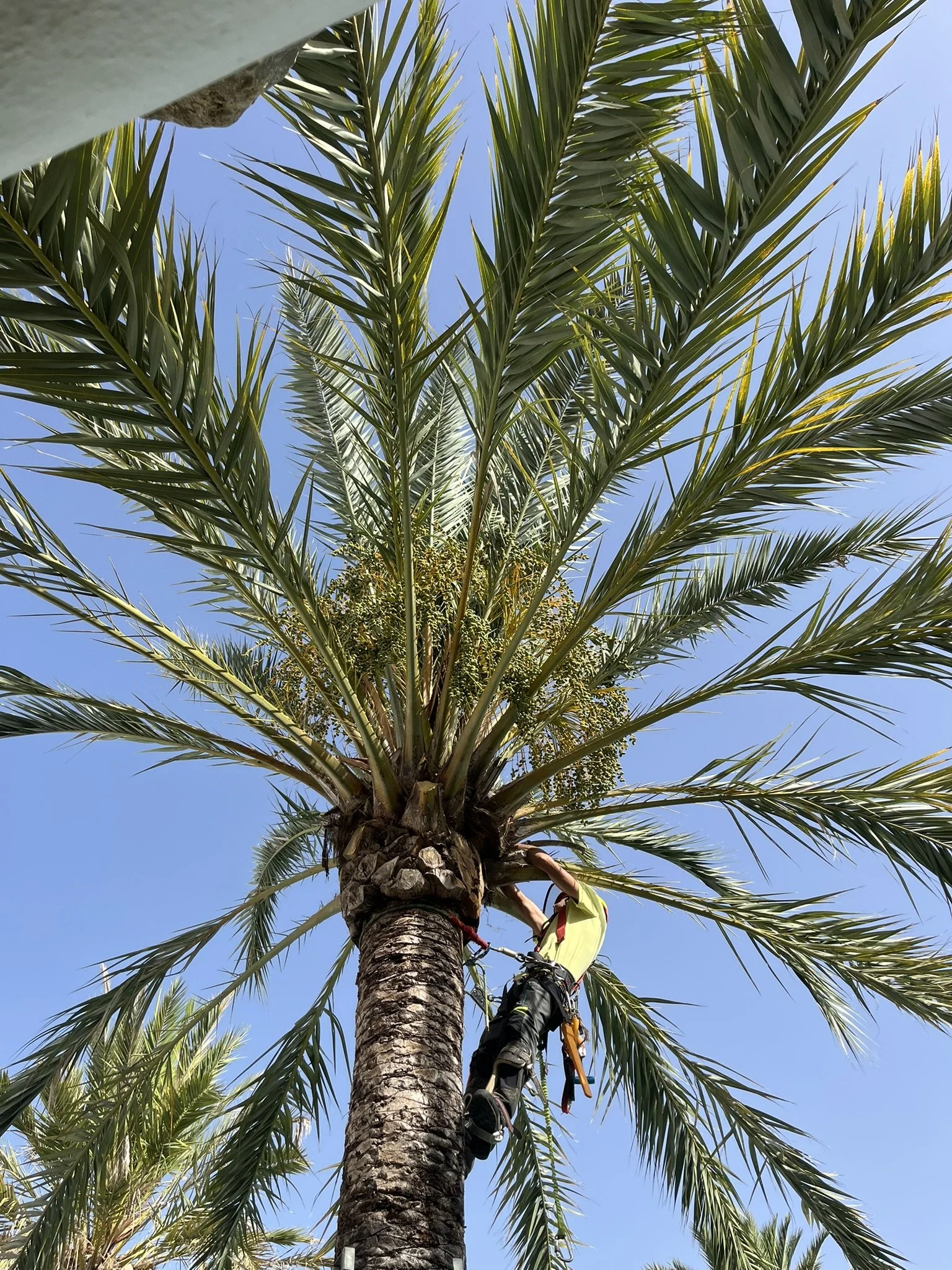
A mature Canarian palm in good health is a significant asset. It adds character, shade and value to any Ibiza property. Replacing a lost palm — if it is even possible — means years of waiting for a new tree to reach maturity, and costs that far exceed the cost of prevention.
Beyond the financial argument, there is also a legal consideration: in Spain, property owners are responsible for the treatment and safe disposal of palm trees affected by picudo rojo. Neglected palms that spread infestation to neighbouring properties can carry liability.
Prevention costs a fraction of the alternative.
How Raíz Can Help
We offer a complete palm tree care service across Ibiza, including:
Crown cleaning and frond removal using professional technique that protects, not weakens, your palms
Endotherapy treatment for picudo rojo prevention, using approved systemic products
Application certificates included with every treatment
Annual maintenance programmes for ongoing protection and monitoring
Free visual assessment at your property
Whether you manage a private villa, a rental property or a comunidad de propietarios, we can advise on the right programme for your palms and your budget.
Book a Free Palm Inspection
If you have Phoenix canariensis palms on your Ibiza property and you are not sure of their current treatment status, the best thing you can do is get them assessed before the problem starts — not after.
Contact Raíz today for a free visual inspection and no-obligation quote.
We cover all areas of Ibiza, from Santa Eulària and San Carlos to Cala de Bou, San José, Santa Gertrudis and the north of the island.
Raíz Landscaping & Design is based in San Carlos, Ibiza. We specialise in garden maintenance, landscape design and tree care for private villas and developments across the island.

