
Why I Hate Weed Membrane — And Why I'd Never Use It in Your Garden
Let me be honest with you about something.
Every season, I visit gardens across Ibiza — villas, fincas, new builds, old estates — and one thing comes up again and again. Rolled out under gravel, stretched between shrubs, stapled down with plastic pegs: weed membrane. Landscape fabric. The black stuff.
And almost every time, it's causing more problems than it's solving.
I understand why people use it. Nobody wants to spend their summers on their knees pulling weeds from bone-dry Ibizan soil in 35-degree heat. When someone at the garden centre tells you this fabric will stop weeds growing — permanently, no less — it sounds like the answer to all your problems.
It isn't.
After years designing and building gardens in Ibiza, I can tell you with complete confidence that weed membrane is one of the worst decisions you can make for a garden you actually care about. Here's why.
What Weed Membrane Actually Does
The idea is simple: lay a permeable fabric over the soil, block sunlight from reaching weed seeds, and watch the problem disappear. Cover it with gravel or bark mulch, stand back, and enjoy a low-maintenance garden forever.
That's the pitch. And for the first year or so, it does work — reasonably well.
The problem is what happens after that.
5 Reasons I Never Recommend Weed Membrane
1. The Weeds Always Come Back — And They're Worse Than Before
This is the one that most people find out the hard way.
Over time, dust, organic debris, and fine soil particles settle on top of the fabric. It doesn't take much — just a thin layer is enough for seeds to germinate. Now you have weeds growing on top of the membrane, with roots threading their way through it and anchoring below.
Try pulling those out. You can't. The roots are interlocked with the fabric, and the only way to deal with them properly is to lift the whole thing — membrane, gravel, everything — and start again.
I've seen gardens in Ibiza where the fabric had been down for five or six years and the weed situation was genuinely worse than if nothing had been laid at all. What was supposed to be a permanent solution had become a permanent problem.
2. It Slowly Kills Your Soil
This is the point I care most about as a professional landscaper, and it's the one that gets the least attention in the DIY guides.
Healthy soil isn't just dirt. It's a living ecosystem — bacteria, fungi, earthworms, beetles, and billions of microorganisms all working constantly to keep your plants healthy. They need air, water, organic matter, and an undisturbed surface to do their job.
Weed membrane cuts off gas exchange, restricts water movement, and separates the soil surface from the natural processes that maintain it. In Mediterranean climates like Ibiza — where soil is already thin, rocky, and prone to compaction — this is a serious problem.
Dead soil means weak roots. Weak roots mean stressed plants. Stressed plants mean a garden that always looks slightly wrong, no matter how much you water and feed it.
3. It Breaks the Nutrient Cycle
Nature has a beautifully efficient system: leaves fall, decompose on the soil surface, feed microorganisms, release nutrients, plants absorb them. It works without any input from you. It has worked for millions of years.
Weed membrane breaks that cycle completely. Organic matter accumulates on top of the fabric but never reaches the soil. The ground beneath slowly becomes more and more inert. To compensate, you end up relying on artificial fertilisers to keep plants alive — plants that would have fed themselves perfectly well in an unmulched, well-managed garden.
You're essentially paying to replicate a process that would have happened naturally for free.
4. It Creates Irrigation Headaches
When I design drip irrigation systems for gardens in Ibiza, weed membrane is one of the most common complications I inherit from previous work.
Water doesn't always penetrate the fabric evenly — it tends to channel and run off, especially once the fabric ages and the pores partially block with fine debris. This creates dry patches underground that you can't see until a plant starts showing stress. By then, you're often dealing with root damage.
And if the system ever needs adjusting, extending, or repairing? You're pulling up gravel, cutting through fabric, and hoping the drip lines underneath haven't been pierced by weed roots. It's a mess that could have been avoided entirely.
5. It Looks Bad — And Gets Worse
I work mainly with high-end private villas and fincas in Ibiza. Clients invest seriously in their outdoor spaces, and they want them to look extraordinary — not just when the project is finished, but five and ten years down the line.
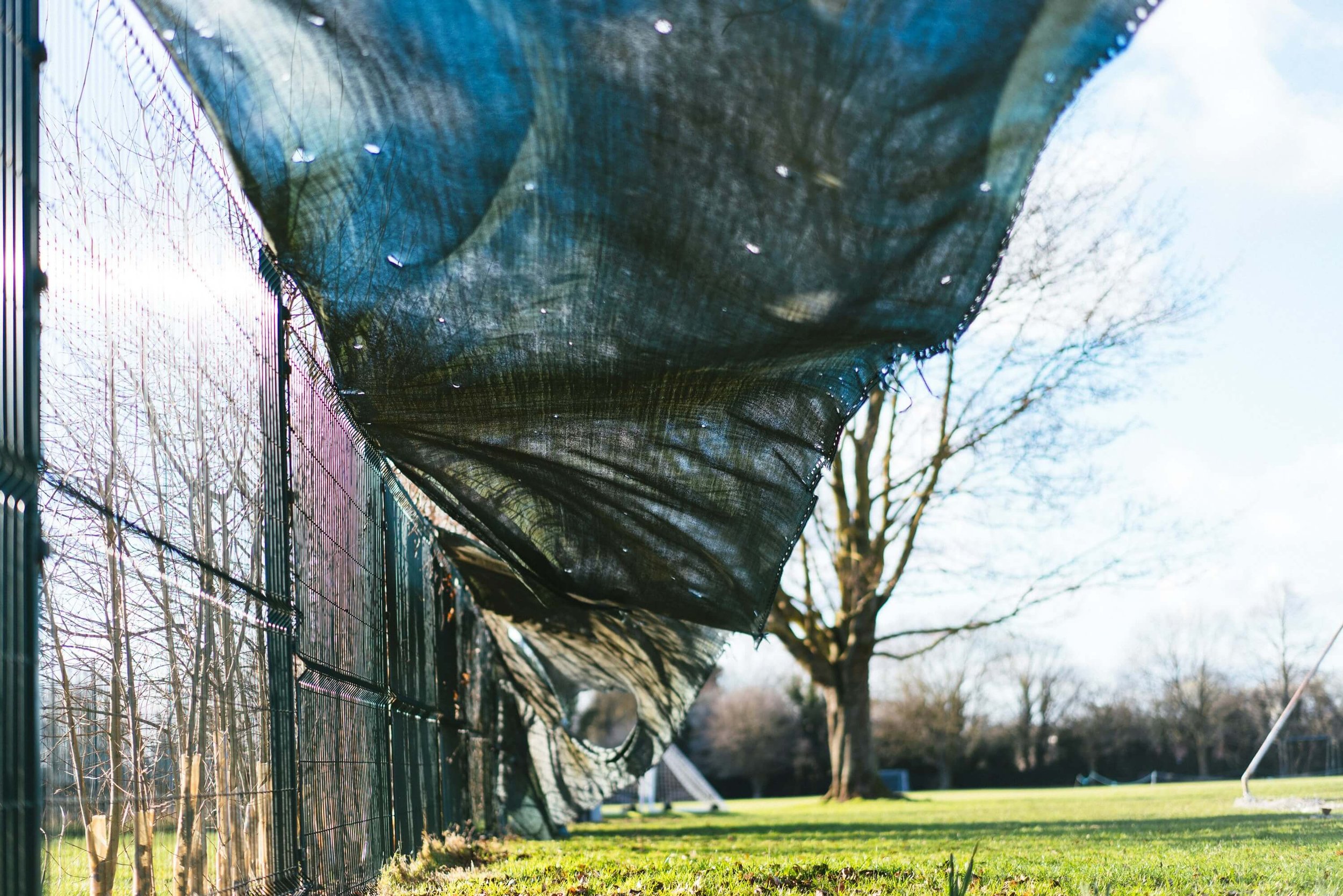
Weed membrane doesn't age gracefully. Within a few years, it starts to show. Edges fray. Corners lift. The fabric degrades in UV and starts breaking into strips. Black plastic peeps out from under gravel after a wet winter or a storm. It looks neglected even when the rest of the garden is well maintained.
A garden should look better with time as the planting matures. Weed membrane works against that.
So What Should You Do Instead?
This is always the follow-up question, and it's the right one to ask.
The answer isn't one single product — it's an approach. And honestly, it's closer to how nature works than most people realise.
Organic Mulch
A thick layer of organic mulch — wood chip, bark, composted straw, pine needles — is the natural alternative to landscape fabric. It suppresses weeds by blocking light, retains soil moisture, regulates soil temperature, and as it slowly breaks down, it feeds the soil beneath it.
This is what a forest floor does. It's what Mediterranean scrubland does. It works.
In the gardens I design and build in Ibiza, I use gravel mulch (specifically yellow fossil limestone gravel, which suits the local aesthetic and geology beautifully) or organic mulch depending on the garden style — but never with membrane underneath. The gravel or mulch sits directly on properly prepared soil, and the results over time are incomparable.
Dense, Well-Chosen Planting
The best long-term weed suppression is a garden so well planted that there's simply no room for weeds to establish. Native and Mediterranean-adapted plants — Pistacia lentiscus, Cistus, Rosmarinus, Stipa grasses, Juniperus — spread, root deeply, and shade the ground around them.
A well-designed planting scheme will do more for weed control than any fabric, and it will look stunning while doing it.
Consistent, Early Maintenance
I know this isn't what anyone wants to hear — but a quick weeding session once or twice a month, tackling plants before they seed, is far more effective than any physical barrier. You're breaking the weed cycle every season, reducing the seed bank in the soil year after year. It becomes less work over time, not more.
Targeted Herbicide When It Makes Sense
I'm not categorically against herbicide. Used selectively — at the start of a project to clear ground, or to tackle a persistent invasive species — it has its place. What doesn't make sense is using it as a substitute for good garden management, or relying on it to compensate for a membrane that's stopped working.
The Bottom Line
If you're planning a new garden in Ibiza, skip the weed membrane. Put that money into better soil preparation, better plants, and a thoughtful design. The difference in five years will be remarkable.
If you already have membrane down and you're noticing the problems I've described — weeds coming through, plants looking tired, fabric starting to show — you're not alone. Membrane removal and soil regeneration is one of the most common jobs I take on. It's more work upfront, but the result is a garden that actually works the way a garden should.
I believe in doing things properly the first time. It costs less in the long run, it's better for the environment, and frankly, it produces gardens that are genuinely beautiful — not just for the first season, but for decades.
Have questions about weed control in your Ibiza garden, or thinking about a redesign? I'm always happy to come and take a look. Get in touch directly — no pressure, just an honest conversation about what your garden actually needs.
Raíz Landscaping & Design · Ibiza · raizibiza.com

